
Jaipur is often celebrated for its forts, palaces, and pink-hued streets. But hidden behind the bustling bazaars and tourist postcards is a quieter truth, some of Jaipur’s most soulful crafts are slowly disappearing.
In the narrow galis of the Old City, hands that once moved with inherited precision now hesitate. Workshops fall silent. Traditions that survived centuries are struggling to survive the present.
Why Are Jaipur’s Traditional Crafts Disappearing?
Despite Jaipur being a global cultural destination, many of its crafts face extinction due to:
- Industrial mass production and cheaper machine-made alternatives
- Declining interest among younger generations
- Low artisan incomes and lack of social security
- Imitation products flooding tourist markets
- Shift in lifestyle, fashion, and entertainment preferences
What was once a respected family legacy is now seen as an economic risk.
1. Blue Pottery: The Craft That Once Died and May Die Again
Blue Pottery is Jaipur’s most recognizable craft, delicate, luminous, and fragile, just like its future.
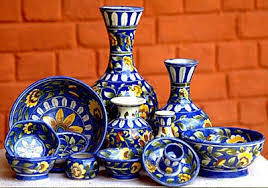
Unlike regular pottery, Blue Pottery uses no clay. It is made from quartz stone powder, glass, Multani mitti, and natural dyes. Its Persian roots traveled through Mughal courts before finding a home in Jaipur.
A Craft That Rose From the Ashes
By the 1950s, Blue Pottery had nearly disappeared. It survived only because Kripal Singh Shekhawat, a visionary artist, revived it through institutional support and design innovation.
Why It’s Struggling Again
- Rising cost of raw materials
- Cheap printed ceramic lookalikes
- Fragility during transport
- Fewer young artisans willing to learn the slow process
If demand shifts only to “cheap décor,” authentic Blue Pottery may fade once more.
2. Sanjhi Craft: Art Meant to Disappear
Sanjhi is one of Jaipur’s most poetic yet unknown art forms.
Traditionally created as temporary paper stencils for temple rituals, Sanjhi was never meant to last. The irony?
Now it may disappear forever.
Why Sanjhi Is Rare
- Each design is hand-cut using scissors and blades
- A single mistake ruins days of work
- Earlier destroyed after rituals, now preserved as art
Museums like the Gyan Museum are attempting to archive Sanjhi, but very few artisans remain who truly master it.
This craft teaches us something profound: Some art was created for devotion, not preservation.
3. Warak (Gold & Silver Foil): The Sound That Is Fading
Before you see Warak, you hear it.
In Old Jaipur, the rhythmic thap-thap-thap of metal sheets being beaten into paper-thin foil once echoed through lanes. This sound is now rare.
What Is Warak?
Warak is edible gold or silver foil used on sweets, religious offerings, and ceremonial items. It is created by pannigars, artisans who beat metal between layers of animal membrane until it becomes almost weightless.
Why It’s Disappearing
- Health concerns and regulations
- Synthetic substitutes replacing real silver
- Physically demanding work with low pay
- Younger generations refusing to continue
When Warak disappears, Jaipur will lose not just a craft, but a soundscape of its heritage.
4. Kathputli: When Stories Lose Their Voice
Kathputli, Rajasthan’s traditional puppetry, once brought entire villages together.
Wooden faces, hand-stitched costumes, and stories passed orally for generations created living theatre long before screens existed.
Why Kathputli Is Struggling
- Digital entertainment replacing live performances
- Reduced patronage from royal courts
- Limited performance platforms
- Migration of artists to daily-wage labor
Kathputli artists are not just performers, they are storytellers of history. When they stop performing, stories vanish with them.
5. Turban Tying: A Skill Losing Its Place on the Head
In Rajasthan, a turban was once identity, pride, and language.
Each region had its own pagri style, tied with precision and meaning, indicating caste, profession, celebration, or mourning.
Why This Art Is Fading
- Western clothing becoming daily wear
- Turbans limited to weddings or festivals
- Fewer experts who can tie traditional styles
Turban tying was never about fashion alone, it was cultural literacy. Today, that language is slowly being forgotten.
How You Can Experience (and Support) These Crafts in 2026
If you truly want to support Jaipur’s vanishing crafts, consumption is not enough, participation matters.
Hands-On Workshops
- Studio Berõ: Blue pottery, lac work, block printing
- Direct interaction with artisans
- Fair wages and authentic learning
Museums That Preserve Stories
- Anokhi Museum of Hand Printing near Amber Fort
- Craft history beyond souvenir shopping
Old City Walking Tours
- Johari Bazaar: Jewelry & Meenakari
- Chaura Rasta: Textiles & printing
- Hidden workshops tourists rarely see
Your presence helps keep workshops alive.
Why These Crafts Matter More Than Ever
Losing these crafts is not just an economic issue.
It is a loss of cultural memory, identity, and human skill.
Once a craft disappears:
- It cannot be machine-recreated
- It cannot be taught from books alone
- It takes generations to revive
Ten years is not a long time.
For some Jaipur crafts, it may be the last chance.
Frequently Asked Questions
What crafts is Jaipur known for?
Jaipur is known for Blue Pottery, Meenakari jewelry, block printing, lac bangles, Kathputli puppetry, and traditional metal and textile crafts.
What is the lost art of Rajasthan?
Arts like Sanjhi paper cutting, traditional Warak making, Kathputli storytelling, and regional turban tying are considered endangered or near-lost.
What is Chandpole Bazar Jaipur famous for?
Chandpole Bazar is known for marble idols, wooden handicrafts, metal artifacts, and traditional artisan workshops.