
Jaipur, the Pink City of India, is famous not just for its magnificent palaces and forts but also for its grand historic gates that once protected the royal city. Among these, Jorawar Singh Gate, also known as Dhruv Pol, stands as a proud symbol of Jaipur’s warrior legacy and architectural foresight.
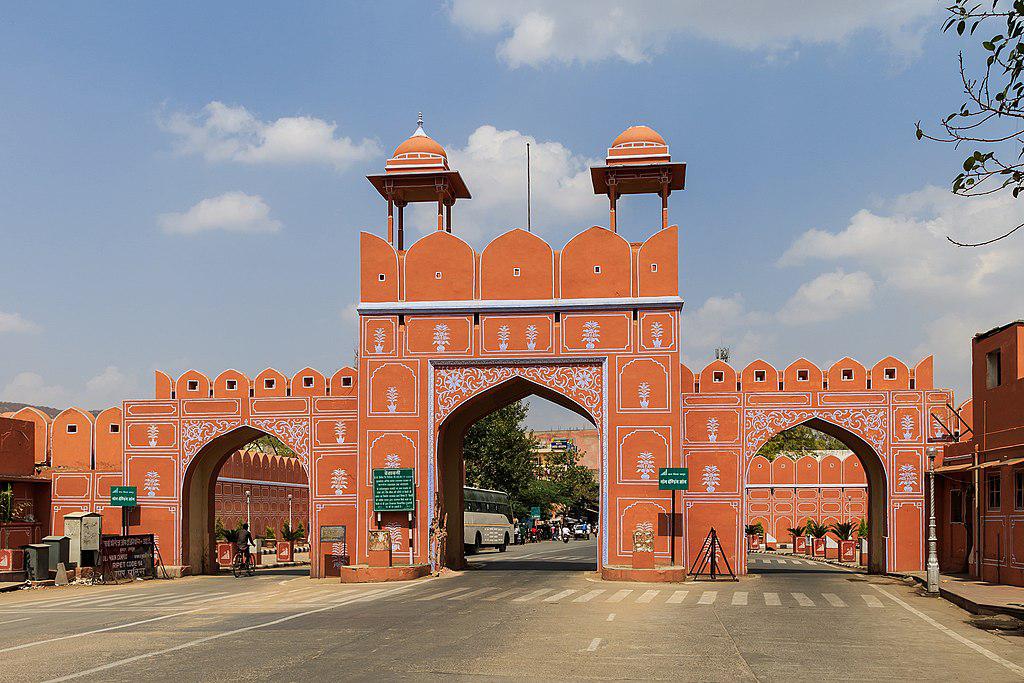
Located on the northern boundary of the walled city, this gate carries deep historical, cultural, and strategic importance. In this detailed guide, we explore the history, location, significance, nearby places, FAQs, pin code, and practical travel information for Jorawar Singh Gate.
Overview of Jorawar Singh Gate (Dhruv Pol)
| Feature | Details |
|---|---|
| Original Name | Dhruv Gate (Dhruv Pol) |
| Current Name | Jorawar Singh Gate |
| Location | Northern boundary of Jaipur Walled City |
| Direction Represented | North |
| Historical Role | Main defensive entry point |
| Architectural Style | Rajput Military Architecture |
| Managed By | Jaipur Nagar Nigam |
History of Jorawar Singh Gate
Originally known as Dhruv Gate, this historic gateway was named after Dhruv Tara (The Pole Star), which represents stability, guidance, and the north direction in Indian cosmology.
Many historians believe that Jaipur city’s construction began from this very gate, making it one of the first gateways to be developed during the early planning of the Pink City by Maharaja Sawai Jai Singh II in 1727.
Later, the gate was renamed Jorawar Singh Gate, likely in honor of a brave Rajput warrior, symbolizing strength, defense, and valor. Over centuries, the gate has witnessed royal processions, trade routes, military movements, and political transformations.
Strategic Importance of Dhruv Pol
During ancient times, every gate in Jaipur’s walled city served a precise purpose. Jorawar Singh Gate:
- Guarded the northern entry into Jaipur
- Protected the city from foreign invasions
- Controlled trade routes from the northern regions
- Symbolized military vigilance and city defense
- Helped regulate population movement
Its location made it a vital security checkpoint for the city.
Architecture of Jorawar Singh Gate
While simpler than ceremonial gates, Jorawar Singh Gate reflects pure Rajput military design, focused on strength and function rather than ornamentation.
Key Architectural Features:
- Massive arched gateway
- Thick fortified walls
- Elevated viewing points for guards
- Heavy wooden door structures (originally)
- Functional, battle-ready design
Unlike Ajmeri Gate or Sanganeri Gate, Dhruv Pol was not meant for royal grandeur, but for defense and surveillance.
Jorawar Singh Gate Location & Map
- Area: Walled City, North Jaipur
- Nearby Areas: Brahmpuri, Ramgarh Mode Road, Subhash Chowk
- Landmark: Near Government Ayurvedic Hospital
If you’re searching online, popular queries include:
- Jorawar Singh Gate Jaipur location map
- Jorawar Singh Gate location
- Dhruv Pol Jaipur map
Also Check: 7 Legendary Gates of Jaipur’s
Jorawar Singh Gate Distance from Major Points
| Starting Point | Distance | Travel Time |
|---|---|---|
| Jaipur Railway Station | 6.5 km | 20–25 min |
| Jaipur International Airport | 15 km | 35–40 min |
| Hawa Mahal | 3.8 km | 12–15 min |
| Jantar Mantar | 4 km | 15 min |
| Amber Fort | 7 km | 20 min |
Historical Gates of Jaipur
Jaipur’s ancient walled city has seven iconic gates, each facing a specific direction:
- Ajmeri Gate – West
- Sanganeri Gate – South
- Surajpole Gate – East
- Chandpole Gate – West/North-West
- Samrat Pole
- Zorawar Singh (Dhruv Pol) – North
- Ghat Gate – East
Best Time to Visit Jorawar Singh Gate
- October to March – Best weather for sightseeing
- Early morning & evening – Best photography light
- Avoid summer afternoons due to heat
Why Jorawar Singh Gate Is Historically Important
- One of Jaipur’s oldest gates
- Represents northern direction & cosmic alignment
- Marks the starting point of city planning
- Symbol of Rajput military strength
- Still an active gateway for local movement
Nearby Tourist Attractions
- Hawa Mahal
- City Palace
- Jantar Mantar
- Galta Ji Temple
- Amber Fort
- Nahargarh Fort
FAQs about Jorawar Singh Gate
What is the history of the Jorawar Singh Gate?
Jorawar Singh Gate was originally called Dhruv Gate, named after the Pole Star (Dhruv Tara). It marks the northern entrance of Jaipur’s walled city and is believed to be one of the first gates constructed during the city’s foundation in 1727.
What are the 7 gates of Jaipur?
The seven gates of Jaipur are:
Ajmeri Gate
Sanganeri Gate
Surajpole Gate
Chandpole Gate
Samrat Pole
Ghat Gate
Jorawar Singh Gate (Dhruv Pol)
Conclusion
Jorawar Singh Gate (Dhruv Pol) is not just a gateway, it is a guardian of Jaipur’s northern frontier and a witness to centuries of royal defense, city planning, and heritage. From its cosmic alignment with the Pole Star to its role in shaping Jaipur’s foundations, this gate stands as a true Warrior’s Gate of the Pink City.