
Jaipur, March 9, 2026: Jubilant celebrations swept across Jaipur after India secured a historic victory in the ICC Men’s T20 World Cup 2026, defeating New Zealand in the final. Cricket fans poured onto the streets waving the Indian tricolour, bursting fireworks, and dancing to the beats of dhol as the city joined the nationwide celebrations.
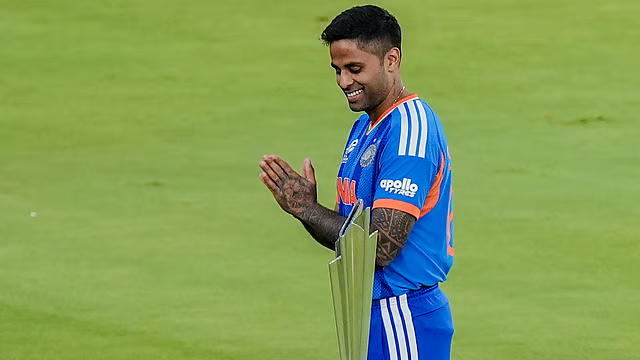
India clinched the title with a dominant 96-run win over New Zealand at the Narendra Modi Stadium in Ahmedabad, marking the country’s third T20 World Cup title and the first successful defence of the trophy in tournament history.
Streets of Jaipur Filled with Celebration
As soon as India’s victory was confirmed, excitement erupted across several parts of Jaipur. Groups of fans gathered at major intersections, markets, and residential areas waving flags and chanting patriotic slogans.
Many youngsters rode bikes and cars through the streets holding the tricolour, while fireworks lit up the night sky. Social media videos and local reports showed crowds celebrating late into the night as the city shared the pride of India’s cricketing success.
The atmosphere reflected the passion of cricket lovers in Rajasthan, where major tournament victories often turn into spontaneous street celebrations.
The Hidden Jaipur Connection to the T20 World Cup Trophy
Amid the celebrations, a fascinating detail about the tournament has drawn attention: the T20 World Cup trophy itself has a special connection with Jaipur.
The iconic trophy was crafted by Jaipur-based designer Amit Pabuwal, who was assigned the task of producing the trophy after the original concept was designed by Australia’s Minale Bryce.
Pabuwal revealed that the design work dates back to 2007, the year the inaugural ICC T20 World Cup was held. After the design outline was finalized, the International Cricket Council (ICC) entrusted him with manufacturing the trophy.
Initially, the trophy was planned to be made using titanium and glass to represent the speed and modern style of T20 cricket. However, technical challenges led to several failed prototypes. Eventually, the trophy was crafted from silver with a platinum coating, making it both durable and visually striking.
A Proud Moment for Jaipur
The fact that the prestigious ICC trophy was crafted in Jaipur has become a matter of pride for the city. As India lifted the trophy once again, many locals pointed out that a part of the global cricket symbol itself originated in the Pink City.
Experts say the story highlights Jaipur’s long tradition of metal craftsmanship and artistic design, which continues to gain recognition internationally.
India Scripts History in T20 Cricket
India’s victory in the 2026 edition also created several records. The team successfully defended the T20 World Cup title and became the first nation to win the tournament three times.
The tournament, held from 7 February to 8 March 2026, featured 20 teams and matches across venues in India and Sri Lanka.
India’s dominant performance in the final capped off an impressive campaign and further strengthened the country’s legacy in T20 cricket.
Pride, Cricket and Celebration
For Jaipur, the celebrations were not just about India’s victory but also about the city’s unique connection to the iconic trophy itself.
As fireworks lit the sky and crowds waved the tricolour, the Pink City joined millions of fans across the country in celebrating a memorable moment in Indian cricket history.