
When the first golden rays of the morning sun touch the pink sandstone walls of Jaipur, they illuminate one of the city’s most symbolic and historic landmarks Surajpole Gate, also known as the Sun Gate of Jaipur. This eastern gateway is not just a physical entrance to the Pink City’s walled heritage; it is a powerful symbol of new beginnings, prosperity, cosmic alignment, and royal wisdom.
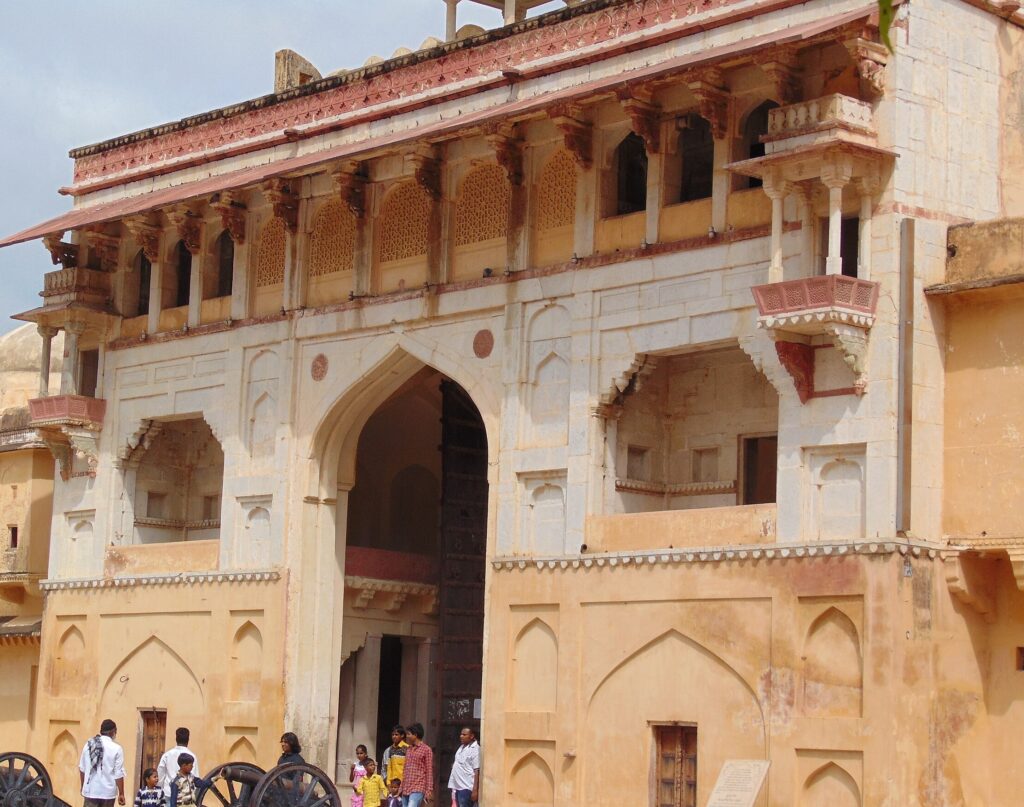
Jaipur is one of the few cities in the world that was scientifically planned based on astronomy, Vastu Shastra, and ancient urban design principles. Every gate of the city had a specific purpose, direction, and symbolic meaning. Among them, Surajpole Gate holds a special place because it opens toward the rising sun an eternal source of life, energy, and positivity in Indian tradition.
But Surajpole is not limited to Jaipur alone. Across Rajasthan, the name “Suraj Pol” appears in several major forts such as Amer Fort, Chittorgarh Fort, and Jaisalmer Fort, each telling its own dramatic tale of royal processions, battles, victories, and cosmic symbolism.
Google Map Location: https://maps.app.goo.gl/ujbRjNnG7dBnA4Mr6
What Is Surajpole Gate Jaipur?
The term “Surajpol” comes from two Hindi/Sanskrit words:
- Suraj – Sun
- Pol – Gate
So, Surajpole literally means “The Gate of the Sun.”
Surajpole Gate in Jaipur
In Jaipur, Surajpole Gate serves as the eastern entrance to the historic Walled City, which was founded in 1727 AD by Maharaja Sawai Jai Singh II. It was designed to ensure that the city received the first blessings of the rising sun every day.
This was not a random architectural decision it was deeply rooted in:
- Astrology
- Vastu Shastra
- Cosmic energy alignment
- Sun worship traditions
Surajpole historically connected the royal city to:
- Johari Bazaar (the famous jewelry market)
- Galtaji Temple (Sun Temple / Monkey Temple)
- The sacred eastern pilgrimage routes
The Historical Origins of Surajpole Gate Jaipur
Foundation of Jaipur (1727 AD)
Jaipur was one of the first planned cities of India, even before many modern European cities were structured scientifically. Maharaja Sawai Jai Singh II, a visionary king, scholar, and astronomer, moved the capital from Amber to Jaipur due to:
- Space limitations in the hilly terrain
- Growing population
- Strategic military concerns
He designed Jaipur using the ancient architectural system called Vastu Shastra and divided the city into nine rectangular sectors, representing the nine planets (Navagraha).
Each main gate of Jaipur was aligned with:
- A cardinal direction
- A specific planet
- A spiritual concept
Symbolic Importance of the East
In Indian philosophy, the East direction represents:
- Sunrise
- New life
- Growth and prosperity
- Divine energy
Placing Surajpole in the East was meant to allow the city to welcome the sun daily, ensuring cosmic harmony and eternal prosperity for the kingdom.
The Spiritual Meaning: The Story of the Rising Sun Gate
Why Is Surajpole Called the Gate of the Rising Sun?
The Rising Sun has always been considered sacred in Indian culture. Kings across India believed they were descendants of the Suryavansha (Solar Dynasty). The sun symbolized:
- Power
- Leadership
- Truth
- Enlightenment
- Immortality
Surajpole became the symbolic gateway of kingship and cosmic authority.
Royal Ceremonies & Auspicious Entries
Historically:
- Royal processions were often timed with sunrise
- Victorious armies sometimes entered through Surajpole
- Special festivals began at dawn from this gate
It represented victory over darkness and chaos a deeply spiritual metaphor.
Architectural Features of Surajpole Gate Jaipur
Though simpler than some palace gates, Surajpole is a masterpiece of defensive Rajput architecture.
1. Massive Sandstone Structure
- Built using sandstone blocks
- Thick walls to resist artillery
- Arched gateway designed for both movement and defense
2. Defensive Design
- Narrow inner passages to control enemy access
- Elevated guard platforms
- Strong wooden gates reinforced with iron
3. Strategic Military Utility
Surajpole functioned not just as an entry point but as:
- A security checkpoint
- An observation post
- A controlled access for trade and civilians
Surajpole Gate Jaipur Location & Connectivity
Surajpole is located on the eastern side of the Jaipur Walled City and connects several major heritage and commercial zones.
Key Areas Connected via Surajpole:
- Johari Bazaar – Jewelry, gemstones, bridal wear
- Galtaji Temple – Ancient Sun Temple & pilgrimage site
- Transport arteries into modern Jaipur
Even today, it acts as a main heritage entry point for visitors exploring Pink City markets and temples.
Other Famous Surajpole Gates in Rajasthan
Surajpole is not unique to Jaipur alone. Many forts across Rajasthan feature a Surajpole gate aligned with the rising sun.
Surajpole Gate Amer Fort (Amber Palace)
This is perhaps the most majestic Surajpole gate in Rajasthan.
- It serves as the main ceremonial entrance to the Amer Palace
- Opens into the Jaleb Chowk, where royal armies assembled
- Overlooks Maotha Lake
- Used for:
- Victory processions
- Elephant parades
- Royal welcome ceremonies
This Surajpole reflects the peak of Rajput military and ceremonial architecture.
Surajpole Gate Chittorgarh Fort
One of the most historically intense Surajpoles in India.
- Strategic eastern entrance of Chittorgarh Fort
- Witnessed the famous siege by Emperor Akbar in 1567
- Its gates feature:
- Iron spikes to stop war elephants
- Heavy stone defense layers
- Symbol of Rajput resistance and sacrifice
Surajpole Gate Jaisalmer Fort (Surya Gate)
- Entry gate to the living fort of Jaisalmer
- Thousands still live inside this fort today
- Famous for:
- Sunrise photography
- Golden sandstone glow at dawn and dusk
Surajpole Gate Udaipur The Rising Sun Story
In Udaipur, Surajpole symbolizes the continuation of the solar dynasty traditions, with processions aligned with sunrise during royal ceremonies.
How Many Gates Are There in Jaipur?
Traditionally, Jaipur had 7 major gates, though historical records mention up to nine protective entry points.
The 7 Main Gates of Jaipur
- Surajpole Gate (East) – Sun Gate
- Chandpole Gate (West) – Moon Gate
- Ajmeri Gate (South-West) – Route to Ajmer
- Sanganeri Gate (South) – Route to Sanganer
- Ghat Gate (South-East) – Trade and market entrance
- New Gate (Ramganj Side) – Added later
- Tripolia Gate / Samrat Pol – Royal/private access
Each gate had:
- Directional significance
- Trade regulation purpose
- Military importance
What Is Sanganeri Gate Famous For?
Sanganeri Gate is another vital entry point in Jaipur.
Key Highlights:
- Southern gateway toward Sanganer town
- Famous for:
- Block-printed textiles
- Handmade paper
- Blue pottery
- Main exit for trade routes to the south
Sanganeri Gate played a major role in handicrafts, exports, and textile trade.
Surajpole vs Gangapole Gate Jaipur: What’s the Difference?
| Feature | Surajpole Gate | Gangapole Gate |
|---|---|---|
| Direction | East | West |
| Meaning | Sun Gate | Gateway of Ganga |
| Symbolism | New beginnings, power | Purity, water, prosperity |
| Usage | Ceremonial + Trade | Ritual + Market entry |
| Architecture | Defensive | Decorative |
Both formed a balanced cosmic axis across Jaipur.
Trade & Economic Importance of Surajpole Gate
Surajpole was not only symbolic but also an economic artery.
- Eastern trade routes entered from Surajpole
- Caravans brought:
- Jewelry stones
- Silk
- Spices
- Control of taxation occurred here
- Johari Bazaar thrived due to Surajpole access
Even now, the areas around Surajpole remain among Jaipur’s busiest commercial zones.
Surajpole Gate & Astronomical City Planning
Sawai Jai Singh II was also the founder of Jantar Mantar, India’s greatest astronomical observatory.
The placement of Surajpole was influenced by:
- Solar movement studies
- Seasonal sun alignment
- Festival calendars
This makes Surajpole not just architectural but scientific in origin.
Best Time to Visit Surajpole Gate Jaipur
Ideal Visiting Hours
- Early Morning (6:00–8:00 AM) – Sunrise glow
- Evening (5:30–7:30 PM) – Heritage lighting and market buzz
Best Season
- October to March – Pleasant weather
- Avoid:
- Peak summer afternoons (April–June)
Surajpole Gate Jaipur Today
Today, Surajpole serves as:
- A heritage photography spot
- A transit point for:
- Pink City shopping
- Sun Temple visits
- A symbolic reminder of Jaipur’s royal planning
Despite urbanization, it still retains its historic aura.
Interesting Facts About Surajpole Gate Jaipur
- Jaipur’s layout mirrors the Sri Yantra
- Surajpole aligns with solar equinox orientation
- Surajpole gates were designed to control:
- Armies
- Merchants
- Pilgrims
- The gates once had heavy wooden doors with iron studs
- Entry timing during war was decided by sunrise calculations
FAQs about Surajpole Gate Jaipur
What is Surajpole Gate Jaipur famous for?
Surajpole Gate is famous as the eastern “Sun Gate” of Jaipur, symbolizing prosperity, sunrise alignment, and royal city planning.
Why is Surajpole called the Rising Sun Gate?
It is called Rising Sun Gate because it faces the exact direction of sunrise, allowing the city to welcome solar energy daily.
Is Surajpole Gate same as Amer Fort Surajpole?
No. Jaipur Surajpole is a city entrance, while Amer Fort Surajpole is a palace ceremonial entrance, though both share the solar alignment philosophy.
How many Surajpole Gates exist in Rajasthan?
Major Surajpoles exist in:
Jaipur
Amer
Chittorgarh
Jaisalmer
Udaipur
How many gates are there in Jaipur?
Traditionally, Jaipur has 7 primary heritage gates, with Surajpole being one of the most significant.
What is the difference between Surajpole and Sanganeri Gate?
Surajpole faces east and is symbolic, while Sanganeri Gate connects Jaipur to southern trade routes.
Final Thoughts: Why Surajpole Gate Still Matters Today
In an age of concrete flyovers and glass towers, Surajpole Gate Jaipur stands quietly as a reminder of India’s ancient scientific wisdom. It shows how architecture, astronomy, culture, defense, and spirituality once merged seamlessly.
More than just an entrance, Surajpole is a solar signature of Jaipur’s royal soul—a gateway that has watched:
- Empires rise
- Markets flourish
- Wars rage
- Pilgrims arrive
- And the sun rise endlessly for nearly 300 years
To walk through Surajpole today is to walk through time itself.