
Jaipur isn’t just about forts and palaces, it’s a living heritage city where every street, temple, and market tells a story. One of the best ways to truly experience this charm is through a heritage walk in Jaipur.
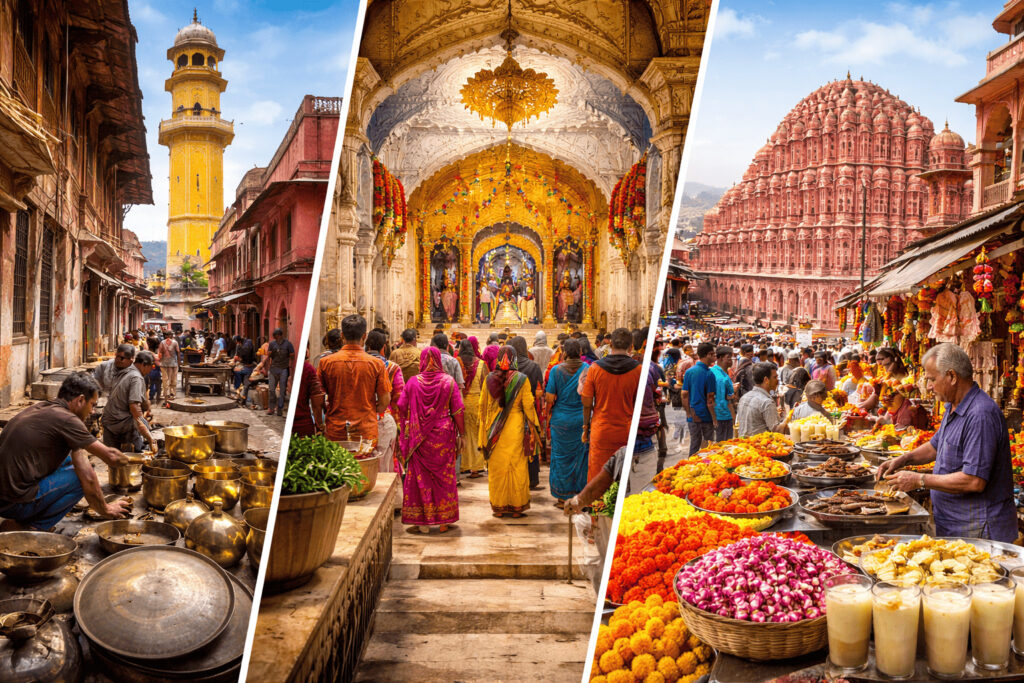
From artisan workshops and hidden havelis to spiritual temples and bustling bazaars, a heritage walk lets you discover the real soul of the Pink City beyond tourist spots.
In this detailed guide, we’ll cover the best heritage walk routes in Jaipur, what to expect, timings, tips, and how to make the most of your experience.
Why Take a Heritage Walk in Jaipur?
A heritage walk is more than sightseeing, it’s about experiencing Jaipur like a local.
Here’s why it’s worth it:
- Explore hidden streets & historic neighborhoods
- Witness traditional artisans at work
- Discover centuries-old temples & culture
- Experience the vibrant bazaars up close
Most walks last between 1.5 to 3 hours and are best done early morning (sunrise to 10 AM) when the city is calm and pleasant.
Best Heritage Walk Routes in Jaipur
Depending on your interest, you can choose from three curated heritage walk experiences:
Option 1: Artisan & Architectural Heritage Walk (Old City Core)
This heritage walk is all about Jaipur’s soul, its craftsmanship, planning, and hidden architecture. Unlike typical tourist routes, this trail takes you into narrow lanes, traditional workshops (karkhanas), and centuries-old havelis that still function today.
It’s the best way to understand how Jaipur was designed and how it still lives as a “working heritage city.”
Ideal Timing & Duration
- Start Time: 6:30 AM – 7:30 AM (recommended)
- Duration: 2 to 3 hours
- End Time: Around 10 AM
Why early morning?
Because:
- Artisans start their work
- Streets are less crowded
- Lighting is perfect for photography
Starting Point: Sitaram Ji Mandir
This quiet temple lane is the perfect entry into Jaipur’s old-world charm.
As you step into Sitaram Ji ki Gali, you’ll immediately notice:
- Narrow pink-walled streets
- Old houses with wooden doors
- Early morning temple bells
This is where your journey into real Jaipur begins.
Stop 1: Thatheron Ka Raasta – The Metal Workers’ Street
This is one of the most fascinating parts of the walk.
“Thatheron” are traditional artisans who hammer brass and copper utensils by hand, a craft passed down for generations.
What You’ll Experience:
- Rhythmic hammering sounds echoing through the street
- Artisans shaping metal sheets into utensils
- No machines, pure hand craftsmanship
Why It’s Special:
This is living heritage, not a museum. These artisans are still practicing techniques that are hundreds of years old.
Stop 2: Modikhana Chowk – Jaipur’s Hidden European-Style Square
A surprising contrast awaits you here.
Modikhana Chowk is designed like a European piazza, something you wouldn’t expect in an Indian old city.
Highlights:
- Open square layout
- Symmetrical building arrangement
- Community-centric design
Why It Matters:
It reflects how Sawai Jai Singh II blended global influences with Indian planning while designing Jaipur.
Stop 3: Kala Bhavan – A Forgotten Heritage Gem
Kala Bhavan is a lesser-known but visually stunning haveli.
What Makes It Unique:
- Vintage British-era lampposts
- Royal insignias and crests
- Faded yet elegant architecture
Experience:
This stop gives you a glimpse into Jaipur’s colonial interaction period, which many tourists miss.
Stop 4: Maharaja School of Arts & Crafts
This iconic building represents Jaipur’s commitment to art and education.
Built In:
19th century
Today:
It houses the Museum of Legacies, preserving:
- Traditional crafts
- Art forms
- Cultural artifacts
Why It’s Important:
Jaipur was not just a royal city, it was a center of design, art, and innovation.
Stop 5: Khajane Walon Ka Raasta – The Stone Carvers’ Lane
This street is dedicated to marble and stone artisans.
What You’ll See:
- Sculptors carving intricate marble designs
- Temple idols being crafted
- Stone being shaped into architectural elements
Experience:
You’ll witness how Jaipur’s iconic structures were, and still are created.
End Point: Choti Chaupar
The walk concludes at Choti Chaupar, one of Jaipur’s main historic squares.
What You’ll Notice:
- Wide open space compared to narrow lanes
- Bustling local life
- Access to markets and metro
Why It’s Significant:
Choti Chaupar is part of Jaipur’s grid-based city planning, a revolutionary concept in the 18th century.
What Makes This Walk Unique?
This isn’t just a walk, it’s a deep dive into Jaipur’s DNA.
You Understand:
- How Jaipur was scientifically planned in 1727
- How traditional crafts are still alive
- The relationship between architecture, economy, and culture
Photography Highlights
- Artisan workshops (action shots)
- Old doors & windows
- Symmetrical streets
- Heritage textures & colors
Option 2: Spiritual Hubs & Living Heritage Walk in Jaipur
This heritage walk takes you through the heart of Jaipur’s living culture, where temples, rituals, and bustling bazaars coexist.
It’s not just a walk, it’s an immersive spiritual experience, where you’ll witness:
- Morning prayers
- Temple rituals
- Local markets waking up
- Traditional crafts in action
Ideal Timing & Duration
- Start Time: 6:00 AM – 7:00 AM
- Duration: 2 to 3 hours
- Best Moment: Ending at Govind Dev Ji Aarti
Why early morning?
- Temples are most active
- Markets begin setting up
- The city feels authentic and peaceful
Starting Point: Ajmeri Gate
Ajmeri Gate is one of the seven historic gates of Jaipur’s Walled City.
What You’ll Notice:
- Massive pink sandstone structure
- Early morning local movement
- Entry into the “old Jaipur” atmosphere
Why It Matters:
This gate marks the transition from modern Jaipur to its 18th-century planned city.
Stop 1: Kishanpol Bazaar – Colors of Jaipur
As you enter Kishanpol Bazaar, the city starts coming alive.
Famous For:
- Bandhani (tie-dye) textiles
- Wooden handicrafts
- Traditional Rajasthani prints
Experience:
- Shopkeepers opening stores
- Fabrics being displayed outside shops
- A burst of colors everywhere
Why It’s Special:
This market reflects Jaipur’s identity as a hub of textile craftsmanship.
Stop 2: Maniharon Ka Raasta – The Lac Bangle Makers
This is one of the most unique and culturally rich streets in Jaipur.
What Happens Here:
- Artisans heat lac (resin) over fire
- Shape it into bangles
- Decorate with stones and colors
What You’ll Experience:
- Live bangle-making process
- Bright colors and intricate designs
- Interaction with local craftsmen
Cultural Importance:
Lac bangles are an essential part of Rajasthani tradition and bridal culture.
Stop 3: Isarlat (Sargasooli)
Also known as the “Tower to Heaven”, Isarlat stands tall in the middle of the old city.
Built In:
1749 by Maharaja Ishwari Singh
Highlights:
- Tall victory tower
- Panoramic views of Jaipur (if open)
- Yellow-painted structure contrasting pink city
Why It’s Important:
It symbolizes Jaipur’s royal history and victories, adding a historical layer to your spiritual walk.
Stop 4: Char Bhujanath Temple
A hidden gem that many tourists miss.
Dedicated To:
Lord Vishnu
Unique Features:
- Indigo-blue fresco paintings
- Intricate wall artwork
- Peaceful, less crowded environment
Experience:
- Quiet darshan
- Artistic spiritual ambiance
Final Stop: Govind Dev Ji Temple
This is the spiritual highlight of the entire walk.
Dedicated To:
Lord Krishna
What Makes It Special:
- One of the most revered temples in Jaipur
- Idol believed to closely resemble Lord Krishna
Morning Aarti Experience:
- Devotional songs (bhajans)
- Bells ringing
- Hundreds of devotees gathered
The energy during Aarti is powerful, emotional, and unforgettable.
What Makes This Walk Unique?
Unlike typical sightseeing, this walk lets you:
- Experience faith in action
- See how Jaipur’s heritage is still alive
- Connect with the spiritual rhythm of the city
Photography Highlights
- Temple rituals & devotees
- Colorful bazaars
- Lac bangle making process
- Street life & expressions
Option 3: Bazaar & Culinary Heritage Walk in Jaipur
If Option 1 is about craftsmanship and Option 2 is about spirituality, then Option 3 is all about flavors, colors, and chaos in the best way possible.
This heritage walk takes you through Jaipur’s most iconic markets and street food lanes, where history meets everyday life. It’s perfect for travelers who want to eat, shop, and experience the city’s pulse.
Ideal Timing & Duration
- Start Time:
- Morning Walk: 7:00 AM – 10:00 AM (flower market + breakfast)
- Evening Walk: 5:00 PM – 8:30 PM (food + shopping + lights)
- Duration: 2 to 3 hours
If you want the best overall experience, go in the morning for authenticity and evening for vibe & lighting.
Stop 1: Johari Bazaar
Welcome to one of the most famous markets in Jaipur (Johari Bazaar).
What It’s Known For:
- Precious and semi-precious jewelry
- Kundan, meenakari, and gemstone work
- Traditional Rajasthani ornaments
Experience:
- Shops opening with rituals
- Glittering displays of gems
- Narrow pink streets filled with energy
Why It’s Special:
Johari Bazaar reflects Jaipur’s global identity as a jewelry capital, a legacy dating back to royal patronage.
Stop 2: Badi Chaupar – The Morning Flower Market
Badi Chaupar is one of the most authentic and photogenic experiences in Jaipur.
What You’ll See:
- Vendors selling marigolds, roses, and lotus flowers
- Fresh garlands being made on the spot
- Local buyers purchasing flowers for temples and homes
Experience:
- Bright colors everywhere
- Fragrance of fresh flowers
- Real, raw morning market life
Why It’s Unique:
This isn’t curated for tourists, it’s a daily ritual of the city.
Stop 3: Hawa Mahal
No Jaipur walk is complete without this iconic view of Hawa Mahal.
Built In:
1799
Known As:
“Palace of Winds”
What to Do Here:
- Admire the honeycomb façade from street level
- Capture the perfect Instagram shot
- Observe the contrast of heritage + busy market life
Pro Tip:
Come early morning for less crowd and soft sunlight photography.
Street Food Experience (The Heart of This Walk)
This is where the walk becomes unforgettable
Jaipur’s old city is packed with legendary food spots. While exploring, make sure to try:
Pyaaz Kachori & Samosa
Crispy, spicy, and iconic Rajasthani snacks.
Lassi (Sweet Yogurt Drink)
Thick, creamy, and served in kulhads (clay cups).
Street Chaat
Tangy, spicy, and full of flavor, perfect for quick bites.
Traditional Mithai (Sweets)
From ghewar to mawa kachori, Jaipur is heaven for sweet lovers.
Photography Highlights
- Flower market colors
- Jewelry shop displays
- Street food action shots
- Hawa Mahal with traffic
Best Time for a Heritage Walk in Jaipur
- Early Morning (6 AM – 10 AM): Best time for peaceful exploration
- Winter (Oct–March): Ideal weather
- Avoid afternoons: Too hot and crowded
Tips for a Perfect Heritage Walk
- Wear comfortable walking shoes
- Carry water & sunglasses
- Respect local culture & temples
- Hire a local guide for deeper insights
- Keep your camera ready
Guided vs Self-Guided Heritage Walk
| Type | Pros | Cons |
|---|---|---|
| Guided Walk | Expert insights, hidden stories | Slightly expensive |
| Self-Guided | Flexible & budget-friendly | Limited information |
Final Thoughts
A heritage walk in Jaipur is not just about visiting places, it’s about experiencing the city’s heartbeat.
Whether you choose:
- The artisan lanes,
- The spiritual temples, or
- The vibrant bazaars,
each route offers a unique perspective of Jaipur’s rich history and culture.
If you truly want to understand Jaipur beyond Instagram spots, a heritage walk is the best way to do it.