
Hidden within the vibrant lanes of Jaipur’s old city lies a street where history is not preserved in museums, but lives, breathes, and echoes through the sound of hammer on metal. Welcome to Thatheron Ka Raasta, one of the most fascinating yet lesser-known heritage spots in Jaipur.
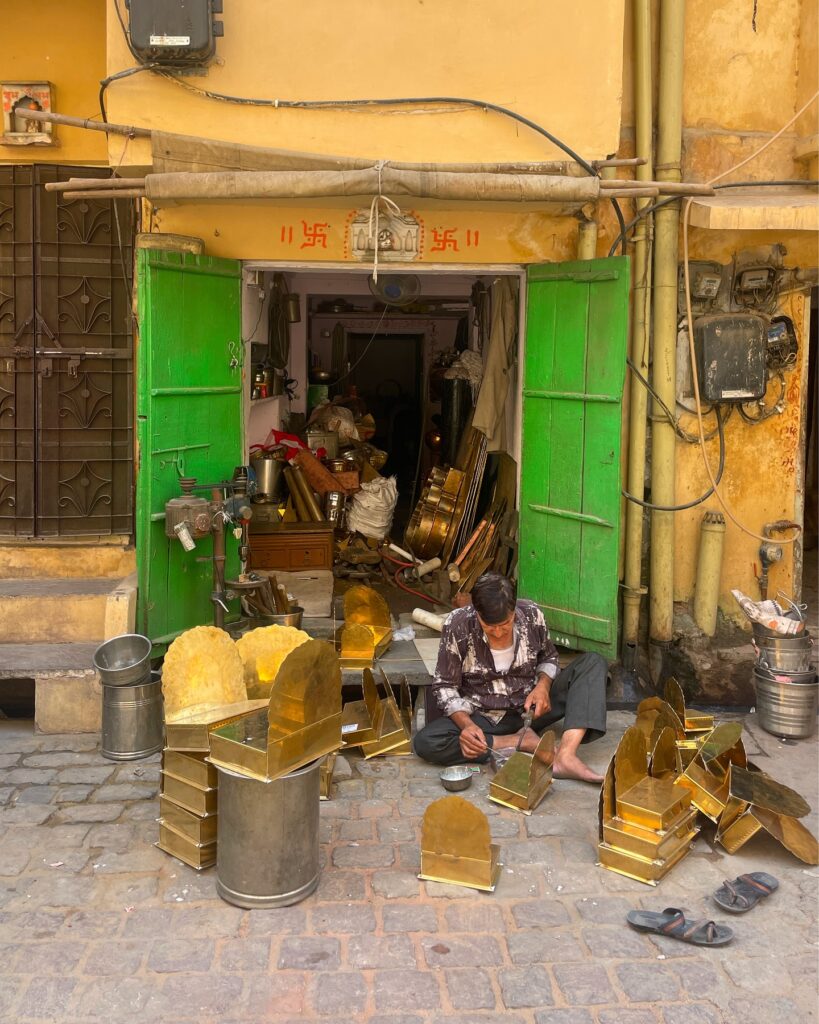
This narrow lane is home to generations of artisans who continue the ancient craft of hand-beaten brass and copper utensil making, keeping alive a tradition that dates back over 300 years.
What is Thatheron Ka Raasta?
“Thatheron” refers to a traditional community of artisans known as Thatheras, who specialize in shaping metal, especially copper and brass, into everyday utensils and decorative items.
“Raasta” means street.
So, Thatheron Ka Raasta literally translates to: “The Street of Metal Craftsmen”
Located in the heart of Jaipur’s Walled City, this street is a living example of India’s artisanal heritage, where craftsmanship is passed down from one generation to the next.
Location & How to Reach
- Location: Near Choti Chaupar, Walled City, Jaipur
- Nearby Landmarks: Sitaram Ji Mandir, Choti Chaupar
How to Reach:
- By Metro: Choti Chaupar Metro Station (walking distance)
- By Auto/Taxi: Easily accessible from all parts of Jaipur
- Best Way: Explore on foot as part of a heritage walk
The Craft – A Symphony of Skill and Tradition
Walking through Thatheron Ka Raasta is a sensory experience.
You will hear:
- The rhythmic sound of hammer striking metal
- The echo of tools shaping sheets into form
You will see:
- Artisans sitting in small workshops
- Sheets of copper being heated, cut, and shaped
- Utensils taking form, entirely by hand
How the Process Works:
- Metal sheets are cut into desired shapes
- The pieces are heated for flexibility
- Artisans hammer them repeatedly to form utensils
- Final polishing and finishing are done manually
No large machines. No automation.
Just skill, precision, and years of experience.
A 300-Year-Old Legacy
The craft practiced here dates back to the time of Sawai Jai Singh II, who established Jaipur in 1727.
Artisans were invited to settle in specific lanes based on their skills, creating a highly organized city structure. Thatheron Ka Raasta became the designated hub for metal craftsmen, and it has remained so ever since.
A Heritage at Risk
Despite its cultural importance, Thatheron Ka Raasta faces serious challenges.
Key Issues:
- Decline in demand for traditional utensils
- Competition from factory-made products
- Younger generations moving to other professions
- Rising cost of raw materials
Many workshops that once thrived are now either closed or struggling to survive.
This makes your visit even more meaningful, you’re not just exploring history, you’re supporting a dying art form.
Why Thatheron Ka Raasta is Special
Unlike monuments or museums, this street offers something rare:
Living Heritage
The craft is still practiced daily, exactly as it was centuries ago.
Authentic Experience
No commercialization, just real artisans at work.
Cultural Depth
It reflects Jaipur’s original urban planning and community structure.
What to Experience & Capture
- Artisans hammering metal (action shots)
- Close-ups of tools and craftsmanship
- Rustic workshop interiors
- Finished copper and brass utensils
It’s a paradise for photographers and content creators.
Best Time to Visit
- Morning (7 AM – 10 AM): Best time to see artisans at work
- Winter Season (Oct–March): Comfortable weather for walking
- Avoid late afternoons when workshops may close
Travel Tips
- Be respectful, this is a working area, not a tourist setup
- Ask before taking photos of artisans
- Support local craftsmen by purchasing small items
- Combine with nearby heritage spots for a complete experience
Add It to Your Heritage Walk
Thatheron Ka Raasta is a key stop in Jaipur’s Artisan & Architectural Heritage Walk in Jaipur.
Nearby places you can explore:
- Sitaram Ji Mandir
- Khajane Walon Ka Raasta (stone artisans street)
- Choti Chaupar and surrounding bazaars
Final Thoughts
In a world dominated by machines and mass production, Thatheron Ka Raasta stands as a reminder of human skill and tradition.
It is not just a street, it is:
- A story of heritage
- A symbol of craftsmanship
- A legacy fighting to survive
If you truly want to understand Jaipur beyond its forts and palaces, this is a place you cannot miss.