
Selling old gold or silver jewellery in Jaipur is straightforward once you know three things: how the rate is actually calculated, which type of buyer suits your situation, and what to check before you hand anything over. Most people who feel shortchanged after selling gold weren’t scammed outright they simply didn’t know what a fair deduction looks like versus an unfair one.
This guide covers where you can sell gold and silver in Jaipur, how the price you’re quoted is worked out, what documents to carry, and the specific checks that protect you from being underpaid.
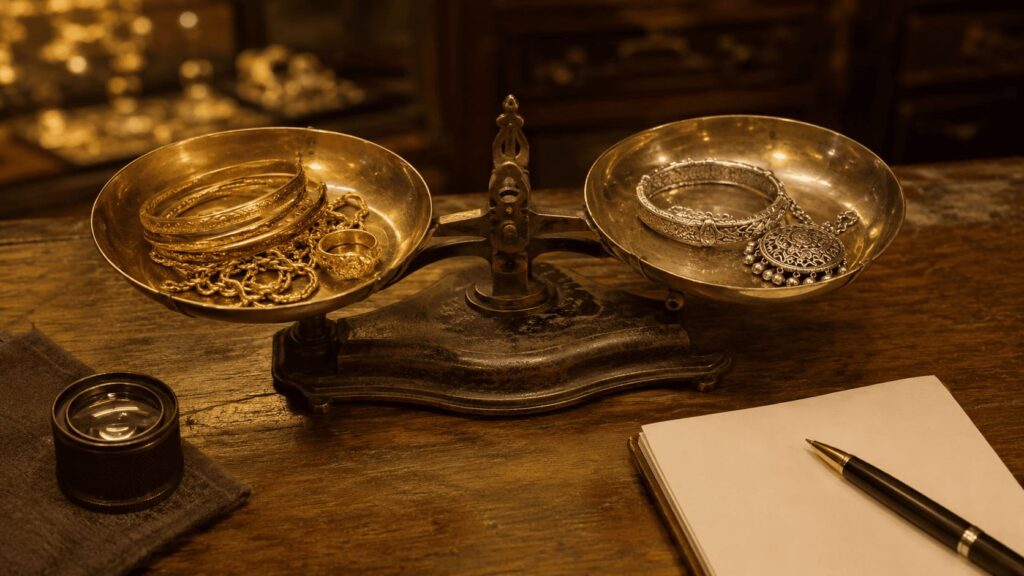
How Gold and Silver Rates Work in Jaipur
Before visiting any buyer, it helps to understand how the number they quote you is actually built.
Gold is priced by purity, not by what the piece looks like. Jewellery gold in India is typically 22 karat (91.6% pure) or sometimes 18 karat (75% pure), while investment-grade gold is 24 karat (99.9% pure). The rate you see quoted daily for example, on financial news sites is usually the 24K rate. Your jewellery, being 22K or lower, is worth proportionally less per gram than that headline number.
The daily rate changes constantly. Gold and silver prices in Jaipur move with international bullion markets, the rupee-dollar exchange rate, and local demand, and can shift even within the same day. There is no fixed “Jaipur rate” it moves daily, sometimes by a meaningful amount during periods of high volatility. Always ask the buyer what today’s reference rate is before any negotiation begins, and consider checking the rate yourself on a financial site like Goodreturns or a similar tracker shortly before you go, so you have your own reference point rather than relying solely on the buyer’s number.
What you’ll actually be paid is lower than the quoted market rate. This is normal and not a sign of being cheated but the size of the deduction varies, and that variation is where you can lose money if you’re not paying attention. A buyer will typically deduct for:
- Purity testing margin most buyers test purity themselves (see methods below) and price based on what they find, which may differ slightly from the karat marked on the piece.
- Wastage or melting loss a small percentage deducted to account for metal lost during the refining or melting process.
- No payment for stones or other materials if your jewellery has gemstones, kundan work, enamel, or other non-metal elements, you are paid only for the gold or silver weight, not the finished piece’s original purchase price. This is the single biggest source of disappointment for sellers who don’t expect it a piece that cost ₹50,000 to make might only be worth its gold weight in resale, often a fraction of the original price, because the making charges and stones you originally paid for have no resale value.
- No buyback of making charges or GST when you originally bought the jewellery, you paid making charges and GST on top of the metal value. None of that comes back when you sell. You are only ever paid for the metal content.
Understanding this in advance prevents the most common source of frustration: expecting your resale value to resemble your original purchase price. It will not. You are selling metal weight at current rates, not the jewellery as a finished product.
Where to Sell Gold and Silver Jewellery in Jaipur
There are four main categories of buyer in Jaipur, and each suits a different situation.
1. Jewellery Shops in Johari Bazaar and Local Markets
Jaipur’s traditional jewellery markets particularly Johari Bazaar, Kishanpole Bazar, and the smaller jewellery clusters in neighbourhoods like Sodala and Vaishali Nagar have dozens of established jewellers who buy as well as sell. Many have been trading for decades and rely on repeat local customers and reputation, which generally makes them a safer first stop than an unfamiliar shop.
Best for: Sellers who want a quick, in-person transaction and are comfortable negotiating face-to-face. Particularly suited to higher-value pieces where you want to see the testing done yourself and discuss the deduction directly.
What to expect: The jeweller will weigh the piece, test the purity (usually with an acid test or an XRF machine), quote a rate based on the day’s price, and make an offer on the spot. Negotiation on the deduction percentage is common and often possible, especially if you have multiple pieces or are a returning customer.
2. Dedicated “Cash for Gold” / Gold Buyer Outlets
Jaipur has several dedicated gold-buying chains and standalone outlets, concentrated in areas like Mansarovar, Vaishali Nagar, and the central market areas. These businesses specialise exclusively in buying old gold and silver (sometimes also diamonds) rather than selling new jewellery, and many advertise same-day cash payment.
Best for: Sellers who want a fast, no-frills transaction, particularly for broken jewellery, scrap gold, or pieces with no sentimental or resale value as finished items.
What to expect: A straightforward weigh-and-test process, typically completed in 15–30 minutes, with payment in cash or bank transfer. Because these businesses operate purely on margin from the gold trade rather than retail jewellery sales, their rates are sometimes more transparent and competitive than a traditional jeweller but quality and trustworthiness vary significantly between outlets, so the verification steps below matter even more here.
3. Bank-Affiliated or Branded Buyback Services
A small number of organised, branded gold buyback services operate purity verification centres that use standardised testing (often XRF technology) and offer payment via direct bank transfer rather than cash. These tend to have more rigid documentation requirements but offer the most transparent, auditable process.
Best for: Larger quantities of gold, sellers who prioritise a fully documented and traceable transaction over speed or negotiation flexibility, and anyone uncomfortable carrying cash.
What to expect: You will typically need to book an appointment or visit a specific verification centre, bring identity documents, and receive payment via bank transfer within a set timeframe after the item is tested and valued rather than instant cash on the spot.
4. Online Gold Buyback Platforms
Several national platforms allow you to request a doorstep pickup, get the item valued, and receive payment digitally, without visiting a shop. Availability and serviceability in Jaipur varies by platform, so confirm pickup is offered in your specific area before relying on this route.
Best for: Sellers who want to avoid travelling with valuables, or who are selling primarily for convenience rather than negotiating the best possible rate.
What to expect: Slower than an in-person sale (typically a few days from pickup to payment), with less room to negotiate the rate in person, but a fully documented digital trail of the transaction.
How to Verify a Gold or Silver Buyer Is Trustworthy
This is the section that matters most. Jaipur has a large and mostly reputable gold trade but as with any market handling valuable metal, it pays to verify before you commit.
Check how long the business has operated at that location. Established jewellers and gold buyers in Johari Bazaar and other traditional markets often display the number of years they’ve been trading. A long-standing physical address with a stable local reputation is one of the strongest trust signals available to you, especially compared to a stall or shop that has recently opened.
Ask which purity testing method they use, and watch it happen. Reputable buyers test gold using either an acid test (a small scratch test using nitric acid to estimate purity) or an XRF (X-ray fluorescence) machine, which is non-destructive and more precise. Insist on watching the test happen rather than accepting a verbal claim about your jewellery’s purity. If a buyer refuses to let you watch the testing, that is a clear reason to walk away.
Get the day’s gold or silver rate confirmed before any weighing begins. Ask the buyer to state today’s rate for the relevant purity before they weigh your item, and compare it against what you checked independently beforehand. A buyer quoting a rate significantly below the genuine market rate for that day is the most common form of underpayment far more common than outright theft or fraud.
Insist on a written receipt or bill for every transaction, regardless of which type of buyer you use. The receipt should include the weight, purity, rate applied, and total amount paid. This protects you in case of any dispute and is standard practice at any legitimate business refusal to provide one is a red flag.
Carry valid government-issued ID. Most legitimate gold buyers in India are required to record identity documents for transactions above certain thresholds, as part of standard anti-money-laundering compliance. Bring an Aadhaar card, PAN card, or similar ID. A buyer who actively discourages you from providing ID, rather than simply not asking, may be operating outside standard compliance practices.
Get quotes from at least two or three buyers before committing, particularly for higher-value pieces. Rates and deduction percentages genuinely vary between outlets, and a quick comparison even a phone call asking for an approximate quote can reveal a meaningfully better offer elsewhere.
Be cautious of any buyer offering a rate noticeably above the going market rate. This sounds counterintuitive, but an unusually generous initial quote is sometimes used to get you through the door, with the final settled amount reduced sharply once your item is actually weighed and tested. A rate that seems too good against what you’ve independently checked is worth treating with the same caution as a rate that seems too low.
What to Bring When You Sell Gold or Silver
A smooth, fairly-priced transaction depends on showing up prepared:
- The jewellery or items themselves, ideally cleaned so testing and assessment are straightforward.
- Original purchase bill or certificate, if you have it. This isn’t required to sell, but it can occasionally support a better valuation, particularly for branded jewellery, hallmarked pieces, or items bought from a well-known jeweller, since it gives the buyer a documented purity reference.
- A valid government photo ID Aadhaar card, PAN card, voter ID, or passport.
- A second person, if the value is significant. Not for safety in a dramatic sense, but simply so you have someone else who heard the quoted rate and saw the transaction take place.
Hallmarking: Why It Matters When Selling
If your gold jewellery carries a BIS (Bureau of Indian Standards) hallmark, it carries a guaranteed, government-certified purity stamp and this generally works in your favour when selling, since the buyer has less room to dispute the purity figure during testing. Older jewellery, particularly pieces inherited or bought decades ago, often predates widespread hallmarking and may need to be tested from scratch. This isn’t a problem, but it does mean the buyer’s testing result not the karat marking stamped on the piece, if any will determine the final price. If your piece is hallmarked, point this out and ask the buyer to factor in the certified purity rather than re-testing from zero, which can sometimes work in your favour on negotiation.
Selling Silver Jewellery: What’s Different
Silver follows the same fundamental principles as gold but with a few practical differences worth knowing.
Silver is priced by weight and purity, exactly like gold, but because the per-gram value is much lower than gold, the deduction percentages a buyer applies can feel proportionally larger even when the underlying margin is similar. Always ask for the rate per gram, not just a vague total quote, so you can do the maths yourself.
Not every gold buyer also buys silver. Many do, but some dedicated gold-only outlets either don’t deal in silver at all or offer noticeably worse rates for it since it isn’t their core business. If you have a mix of gold and silver to sell, ask explicitly whether the buyer handles both before travelling there.
Silver jewellery is more likely to contain mixed alloys (sterling silver, for example, is only 92.5% pure) than gold typically is, which means purity testing matters just as much, if not more, for silver. Don’t skip the verification steps above simply because silver is lower value per piece the same precautions apply.
Oxidised and antique silver jewellery may have artistic or antique value beyond its metal weight. If you have older tribal, oxidised, or distinctly handcrafted silver pieces, it may be worth getting an opinion from an antique dealer or jewellery appraiser before selling purely by weight, since some pieces are worth meaningfully more intact than melted.
Tax Considerations When Selling Gold or Silver
This is worth understanding even briefly, particularly for larger transactions.
Selling personal gold or silver jewellery that you have owned for personal use is generally treated differently from selling gold as an investment asset, and any potential capital gains tax liability depends on factors like how long you’ve owned the item, its original cost, and the amount involved. For high-value transactions, it is worth keeping the receipt from your sale along with any documentation of original purchase, and consulting a tax professional if the amount is significant. This is not something this guide can advise on specifically, since tax treatment depends on individual circumstances but retaining proper documentation from the sale protects you either way.
Step-by-Step: How a Typical Sale Works
- Research the day’s gold or silver rate independently before you go, using a financial site or rate tracker.
- Choose your buyer category based on your priority speed (cash-for-gold outlet), trust and relationship (established local jeweller), or full documentation (branded buyback service).
- Get quotes from two or three buyers if the value is significant, either by visiting in person or calling ahead.
- Bring your ID, the jewellery, and any original bills or certificates you have.
- Watch the purity test happen ask which method is being used and observe it directly.
- Confirm the day’s rate being applied before final weighing, and compare it to what you researched.
- Negotiate the deduction percentage if you’re at a traditional jeweller this is often more flexible than the testing result itself.
- Insist on a written receipt showing weight, purity, rate, and total payment.
- Choose your payment method cash for speed, bank transfer for a documented trail, particularly for higher amounts.
- Keep the receipt for your records, especially if the transaction value is significant enough to have tax implications.
FAQ about Selling Old Gold and Silver Jewellery in Jaipur
How is the price of old gold jewellery calculated in Jaipur?
The price is based on the weight of the gold, its tested purity (karat), and the current day’s market rate for that purity minus a deduction for wastage and the buyer’s margin. Stones, enamel work, and other non-metal materials are not paid for; only the metal content is valued.
Will I get the same price I paid when I bought the jewellery?
No. The price you originally paid included making charges, GST, and the value of any stones or design work, none of which is recovered when you sell. You are paid for the current value of the metal weight alone, which is typically significantly less than the original purchase price.
What documents do I need to sell gold or silver jewellery in Jaipur?
A valid government-issued photo ID, such as an Aadhaar card or PAN card. Original purchase bills or hallmark certificates are not mandatory but can support a more favourable purity assessment if you have them.
Is it safe to sell gold to a “cash for gold” shop instead of a regular jeweller?
Both can be safe, provided you verify the buyer using the checks in this guide confirmed years in business, transparent purity testing you can observe, a written receipt, and a quoted rate that matches independently checked market rates. The buyer category matters less than how carefully you verify any individual buyer.
Can I negotiate the rate when selling gold?
Yes, particularly the deduction percentage applied for wastage and margin, which varies between buyers. The underlying market rate for gold or silver itself is set daily and is not generally negotiable, but the deduction on top of it often is.
Do I have to pay tax when I sell old gold jewellery?
This depends on individual circumstances, including how long you’ve owned the item and the amount involved. Keep your sale receipt and any original purchase documentation, and consult a tax professional for transactions of significant value.
Where in Jaipur has the most gold buyers concentrated in one area?
Johari Bazaar and the surrounding old city markets, including Kishanpole Bazar, have one of the highest concentrations of jewellery shops and gold buyers in the city, many of which have operated for decades.
A Final Note on Getting a Fair Price
The biggest factor in whether you get a fair price for old gold or silver isn’t which specific shop you choose it’s whether you walked in informed. Know the day’s rate before you go. Watch the purity test happen. Ask for a written receipt. Get a second quote if the value is meaningful. These four habits matter more than any single recommendation of “where” to sell, because they protect you regardless of which buyer you ultimately choose.
Also on Jaipur Unveiled: Kishanpole Bazar Jaipur: Complete Guide | Where to Donate Old Clothes in Jaipur